
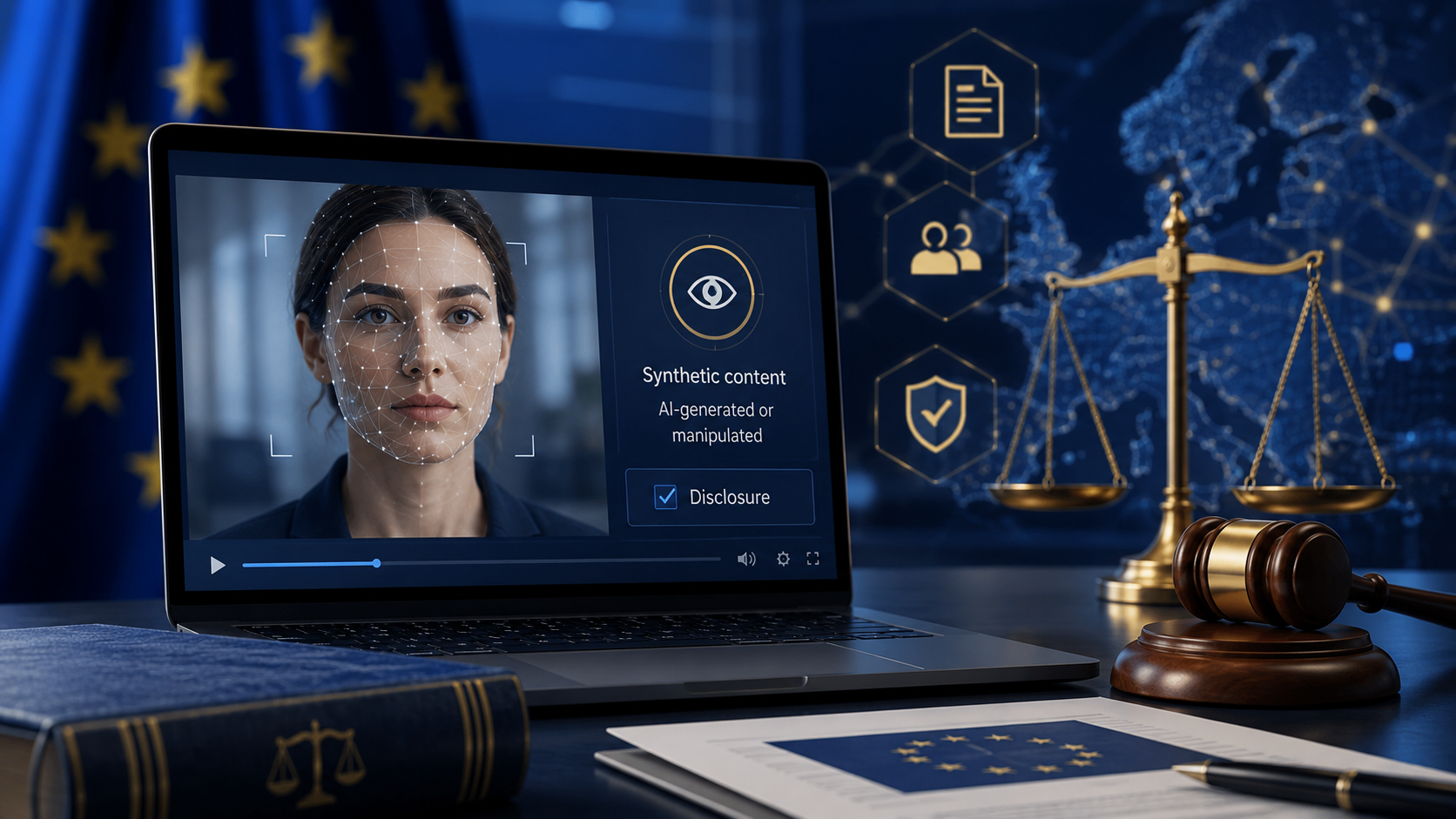
قانون هوش مصنوعی اروپا و الزام شفافیت در تولید محتوا
۲۰ تیر ۱۴۰۵ | اخبار حقوق دیجیتال و هوش مصنوعی
تهیه، ترجمه و تحلیل حقوقی: مرضیه افضلی ـ وکیل پایه یک دادگستری
از ۲ اوت ۲۰۲۶، تکالیف شفافیت پیشبینیشده در ماده ۵۰ «مقرره اتحادیه اروپا ۲۰۲۴/۱۶۸۹»، معروف به قانون هوش مصنوعی اتحادیه اروپا، قابل اجرا میشود.
این مقرره برای برخی محتواهای تولید یا دستکاریشده با هوش مصنوعی، از جمله تصاویر، صداها و ویدئوهایی که ممکن است واقعی به نظر برسند، تکالیفی در زمینه شفافیت و اطلاعرسانی تعیین کرده است.
بخشی از بند ۴ ماده ۵۰ مقرر میکند:
“shall disclose that the content has been artificially generated or manipulated.”
ترجمه غیررسمی:
بهکارگیرنده سیستم باید اعلام کند که محتوا بهطور مصنوعی تولید یا دستکاری شده است.
این حکم به زبان ساده چه میگوید؟
در مواردی مانند دیپفیک، هنگامی که تصویر، صدا یا ویدئویی با استفاده از هوش مصنوعی تولید یا دستکاری شده و بهگونهای ارائه میشود که ممکن است واقعی تلقی شود، بهکارگیرنده سیستم باید مصنوعی یا دستکاریشدهبودن آن را به مخاطب اعلام کند.
این تکلیف به این معنا نیست که تمام محتواهای تولیدشده با هوش مصنوعی، در هر شرایطی، مشمول یک شیوه واحد برای اطلاعرسانی هستند. ماده ۵۰ میان انواع محتوا و نقش اشخاص مختلف، از جمله ارائهدهندگان و بهکارگیرندگان سیستمهای هوش مصنوعی، تفاوت قائل شده است.
در مورد آثار هنری، خلاقانه، طنز و داستانی نیز اصل اطلاعرسانی درباره مصنوعی یا دستکاریشدهبودن محتوا باقی است؛ اما نحوه اعلام میتواند متناسب با ماهیت اثر انتخاب شود، بهگونهای که نمایش اثر یا بهرهمندی مخاطب از آن را مختل نکند.
پیام این مقرره برای تولیدکنندگان محتوا و کسبوکارها
این مقرره متعلق به اتحادیه اروپاست و مستقیماً در ایران بهعنوان قانون لازمالاجرا شناخته نمیشود؛ بااینحال، پیام مهمی برای هنرمندان، رسانهها، برندها، آژانسهای تبلیغاتی و کسبوکارهای تولیدکننده محتوا دارد.
در قراردادهای تولید محتوا، دیگر فقط کیفیت اثر، مبلغ قرارداد و زمان تحویل اهمیت ندارد. طرفین باید درباره استفاده از هوش مصنوعی نیز تصمیم روشنی بگیرند:
- آیا استفاده از هوش مصنوعی در تولید یا ویرایش محتوا مجاز است؟
- آیا تولیدکننده موظف است استفاده از هوش مصنوعی را به کارفرما اعلام کند؟
- چه کسی مسئول اطلاعرسانی به مخاطب درباره مصنوعی یا دستکاریشدهبودن محتواست؟
- اگر محتوای تولیدشده با هوش مصنوعی موجب فریب مخاطب، نقض حقوق اشخاص یا آسیب به اعتبار یک فرد یا کسبوکار شود، مسئولیت جبران خسارت بر عهده کدام طرف خواهد بود؟
- آیا کارفرما پیش از انتشار محتوا، حق بررسی و تأیید نهایی آن را دارد؟
نگاه حقوقی
قانون هوش مصنوعی اتحادیه اروپا نشان میدهد که در آینده، مسئله فقط این نخواهد بود که «محتوا را چه کسی ساخته است»؛ بلکه این سؤال نیز اهمیت پیدا میکند:
آیا مخاطب میداند آنچه میبیند یا میشنود، واقعی نیست؟
برای کسبوکارها و تولیدکنندگان محتوا، پاسخ به این پرسش نباید به بعد از انتشار محتوا و وقوع بحران موکول شود. حدود استفاده از هوش مصنوعی، تکلیف اطلاعرسانی و مسئولیت هر یک از طرفین باید از ابتدا در قرارداد مشخص شود.
منبع: مقرره اتحادیه اروپا ۲۰۲۴/۱۶۸۹، ماده ۵۰، بهویژه بند ۴؛ پایگاه رسمی EUR-Lex و کمیسیون اروپا.
English Version
The EU AI Act and Transparency Obligations for AI-Generated Content
11 July 2026 | Digital Law & AI News
Prepared, translated and legally analysed by Marzieh Afzali, Attorney at Law
From 2 August 2026, the transparency obligations laid down in Article 50 of Regulation (EU) 2024/1689, commonly known as the European Union Artificial Intelligence Act, will become applicable.
The Regulation establishes transparency and disclosure obligations for certain forms of AI-generated or manipulated content, including images, audio and video that may appear authentic.
Part of Article 50(4) provides that the relevant deployer:
“shall disclose that the content has been artificially generated or manipulated.”
In other words, the deployer must inform the audience that the content has been artificially generated or manipulated.
What does this rule mean in practice?
In cases such as deepfakes, where an image, audio recording or video has been generated or manipulated using artificial intelligence and is presented in a way that may cause it to be perceived as authentic, the deployer must disclose its artificial or manipulated nature to the audience.
This obligation does not mean that every form of AI-generated content is subject to the same disclosure method in every situation. Article 50 distinguishes between different types of content and between the roles of different actors, including providers and deployers of AI systems.
The disclosure obligation also applies to artistic, creative, satirical and fictional works. However, the method of disclosure may be adapted to the nature of the work, provided that it does not interfere with the display or enjoyment of the work.
What does this Regulation mean for content creators and businesses?
This Regulation belongs to the European Union legal framework and is not directly applicable as binding law in Iran. Nevertheless, it sends an important message to artists, media organisations, brands, advertising agencies and businesses involved in content creation.
In content production agreements, quality, price and delivery deadlines are no longer the only issues that matter. The parties should also make clear decisions about the use of artificial intelligence:
- Is the use of artificial intelligence in producing or editing the content permitted?
- Must the content creator disclose the use of AI to the client?
- Which party is responsible for informing the audience that the content is artificial or manipulated?
- If AI-generated content misleads the audience, infringes a person’s rights or damages an individual’s or business’s reputation, which party will be liable for the resulting harm?
- Does the client have the right to review and approve the content before publication?
Legal Perspective
The EU Artificial Intelligence Act indicates that, in the future, the key question will not only be who created the content. Another question will become equally important:
Does the audience know that what they are seeing or hearing is not real?
For businesses and content creators, the answer to this question should not be postponed until after publication or until a crisis occurs. The permitted use of AI, disclosure obligations and each party’s responsibility should be clearly addressed in the contract from the outset.
Source: Regulation (EU) 2024/1689, Article 50, particularly paragraph 4; the official EUR-Lex database and the European Commission.